The handstand can be a very time consuming skill to achieve.
A question I get fairly often in my workshops is how to program the handstand alongside other physical practices to still be able to make progress.
Now in this case when I say "programming" I'm not necessarily talking about sets and reps, but conceptually where and when to perform the handstands to still make progress while prioritizing other physical arts.
First let's review a couple attributes that are important to understand about handstand training.
-It is precise skill work
-Though stress is placed on the wrists and shoulders, the goal is to make the skill less physically draining by using the appropriate technique
-Consistent practice is required to learn how to adjust for differences within the body
-When learning to build proper movement patterns, fatigue is not your friend unless you are specifically working endurance
-Understand your place in the progressions, but do not be afraid to add some time to play as well
As a beginner learning handstands, it is best to practice as often as possible while staying as fresh as possible. In addition, it's best to keep efforts sub-maximal, both for safety and to encourage better movement habits.
If you are curious about progressions, or priorities for different level practitioners I have them outlined in my EBOOK.
Now let's go over some of the options on how to make progress in handstand training when it is not the priority of your physical practice.
1. GREASING THE GROOVE
This is a concept made popular by Pavel Tsatouline, the basic idea is to do sub-maximal sets throughout the day to get more numbers in and build up to a higher workload.
This can be a very powerful concept and can allow more time to "play" with the skill, but also has a couple downsides.
Though the handstand is skill work it is also very much dependent on other attributes like mobility and body awareness.
With the GTG method, it is basically assumed that all the sets are performed with no warm-up. While performing the skill cold is a good indicator of confidence level, it can compromise the quality of the skill itself.
I use a very specific warm-up to help develop body position, physical acclimation, proper activation, and awareness(check out my VIMEO page for my wrist and shoulder warm-ups). It's not just about warming up but rather priming my mind and body to have a more productive skill session. When I don't warm up my wrists properly for example, I can feel how my balance corrections are considerably slower.
To use another example, many people have a shoulder or wrist mobility deficit which they need to address to improve their handstands. GTG means they will continue to work through their compensations. Since we are what we do often, these are the habits built that later become difficult to correct.
I'm all for the "Greasing the Groove" method to get more numbers in, just be aware of an compensations that arise from performing the skill cold.
2. INCLUDE HANDSTANDS IN YOUR REGULAR TRAINING SESSIONS
This one can be a bit tricky but if you're already training it's not that difficult to allow some extra time in your session for the skill work. I believe that handstand training can complement other physical practices quite well. Old time weightlifters and strongmen were also avid hand balancers.
Hand balancing also can play an important role in evening out the upper body development in pulling based athletes, such as climbers, aerialists and pole dancers.
-Handstands during warm-up
This is probably the best option for most people. Allow some extra time in your warm-up for your handstand practice. This way you can get the skill work in while you're fresh, and the meditative benefits of the handstand can even help get you in the right state of mind for your other training.
The key is to is to keep efforts sub-maximal and sessions short. Stop before you get tired; this way you will develop better movement patterns without impeding the training for your primary discipline.
Remember that you can easily build up to a moderate skill level in handbalancing without putting in hours a day as long as you are consistent(more advanced skillsets will require more training time).
-Handstands After Training your primary discipline
I would recommend this less than the previous approach. You may find it difficult to "get in the zone" both mentally and physically. Certain muscle groups may have tightened up or blood flow may be going to the wrong places. Either way, it's going to be harder to find the balance here(especially for beginner levels).
If you are practicing your handstands post-training, you will be better off sticking to less precise conditioning based exercises like wall walks, handstand walks, endurance holds, or basic strength and flexibility. Save the balance acquisition part of the skill for when you are more fresh.

-Final thoughts
The above concepts are to include handstand training alongside your other physical practices. Do not forget what your goals and aspirations are.
If hand balancing is a primary goal, it would make more sense to schedule dedicated handstand sessions. After all, you will make faster progress that way.
Progress can also be streamlined by understanding the proper progressions. Check out my ebook for those:
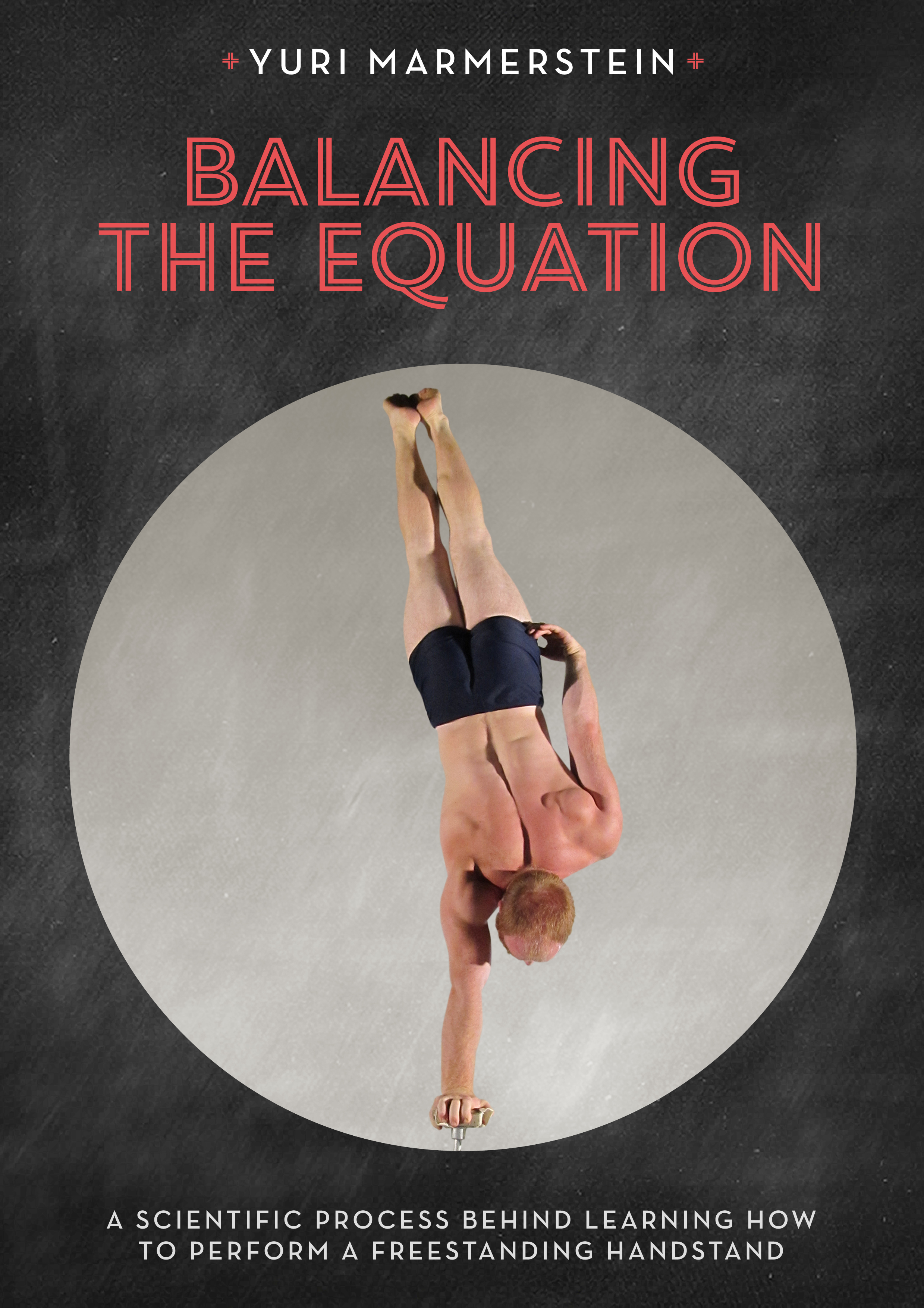
The handstand is one of the most simple, yet one of the most humbling, skills in the span of the physical arts. It seems so simple, yet it can be an incredibly frustrating skill to learn. Because of this, many people think that handstands are reserved for gymnasts and circus performers. Let me say, though, that the handstand is accessible to anyone willing to put in the time.
A hand balance practice is incredibly beneficial for the body and mind. The amount of concentration required makes it a form of meditation. Physically, it is an incredible display of strength, body control and awareness. Balancing on your hands requires constantly making small adjustments within the body. There is no other art form that requires as much precision as the handstand.
This book breaks down the process to achieving a freestanding handstand for a beginner, starting from the very basics. This process is useful to those learning their first handstands as well as those who teach it, such as gymnastics coaches, CrossFit coaches and yoga instructors. The concepts detailed in this book are focused on learning the skill as an adult by promoting understanding of the art in order to make progress. It takes the mystery out of the skill, and presents it in a way anyone can learn.
In order to complement the material in this ebook, check out the associated Video exercise library: https://vimeo.com/ondemand/190235