This is an interesting question I get fairly often, about how much of my physique came from my handstands and what kind of hypertrophy gains can be expected from the practice.
As usual, the answer is not a simple one.
Here are a couple points to consider:
-Handstand is a technical discipline. That means to do it right is to perform the skill in a way that is the most efficient and least physically demanding. More skill gains mean less physique gains.
-Handstand is a bodyweight discipline. While anyone can learn it, being as light as possible does carry advantages to skill gains.
-Flexibility is also an important aspect of the skill work and while this is not always the case, being more muscle-bound generally equates to being less flexible.
In terms of my own practice:
-Handstands have held a place in my own physical practice for the last 14 years or so, though I definitely did not follow what would be considered today’s standard progression.
-Apart from handstands I have practiced many different disciplines which all contributed to my physique gains.
-While handstands have been a factor for me, it is far from the only one.
General points to consider:
-Everyone responds to training differently, so two people doing the same workout will see very different results from it. The same goes with a skill-based physical discipline like hand balancing.
-In high level hand balancers, you will see similar development in shoulders, wrists and forearms. However it should be noted that many of the world’s best handbalancers don’t have impressive physiques(from a bodybuilding or weightlifting perspective). Likewise, many “jacked” handbalancers I can think of learned their skill when they were more skinny, then hit the weights later on to bulk up, and of course kept up with their skill work.
-Kind of a repetitive point of this article, but there is not always a direct correlation between strength, skill, and muscle mass.
-You should do handstands because you enjoy it. If you do it for the physique gains you are in it for the wrong reason. It might take a really long time to see noticeable muscle from your handstand practice, or it may not happen at all.
-There are much more effective ways of building up your upper body than a handstand practice, though I think it is a valuable addition to your program. My original handstand inspirations were the old time strongmen who used to practice HS in addition to their normal weight training.
What should you focus on to get more physique gains from your handstand training?
-Handstand pushups are fantastic for building the upper body in pressing .Freestanding ones are even better because you get the added benefit of balance corrections and stability work.
-Handstand Walking is a fantastic shoulder conditioning exercise that has much less of a skill/technical component compared to static balance. It’s an easily accessible move that offers the benefit of one arm support with full bodyweight at higher reps/distance. Also this one is fun to do. It is a staple of conditioning/warmup in not only gymnastics but martial arts like wrestling, judo, and capoeira.
-Press to handstand also trains the shoulders in a very unique way and will definitely help to build the delts, traps, and upper back.
-Long endurance holds are excellent for a pump in the shoulders and forearms(when free balancing). It can also be debated that the extra bloodflow to the upper body can help even more with recovery and building up the musculature.
-Feel free to add in some pulling work to balance out your physique and strength levels.
Conclusion
The intention of a handstand practice is to get better handstands. Physique gains may or may not result from it, but are by no means guaranteed. If your priority is hypertrophy, you’ll be better off with a bodybuilding based strength/conditioning program and adding in some handstand work on the side for added gains.
If your main goal is handstands but want to get more jacked, place more priority on the movements I listed above and maybe include some more bodybuilding style work 1-2 times a week.
Interested in learning more of a no-BS approach about handstands and other physical arts? Check out my handstand ebook and my workshops all around the world.
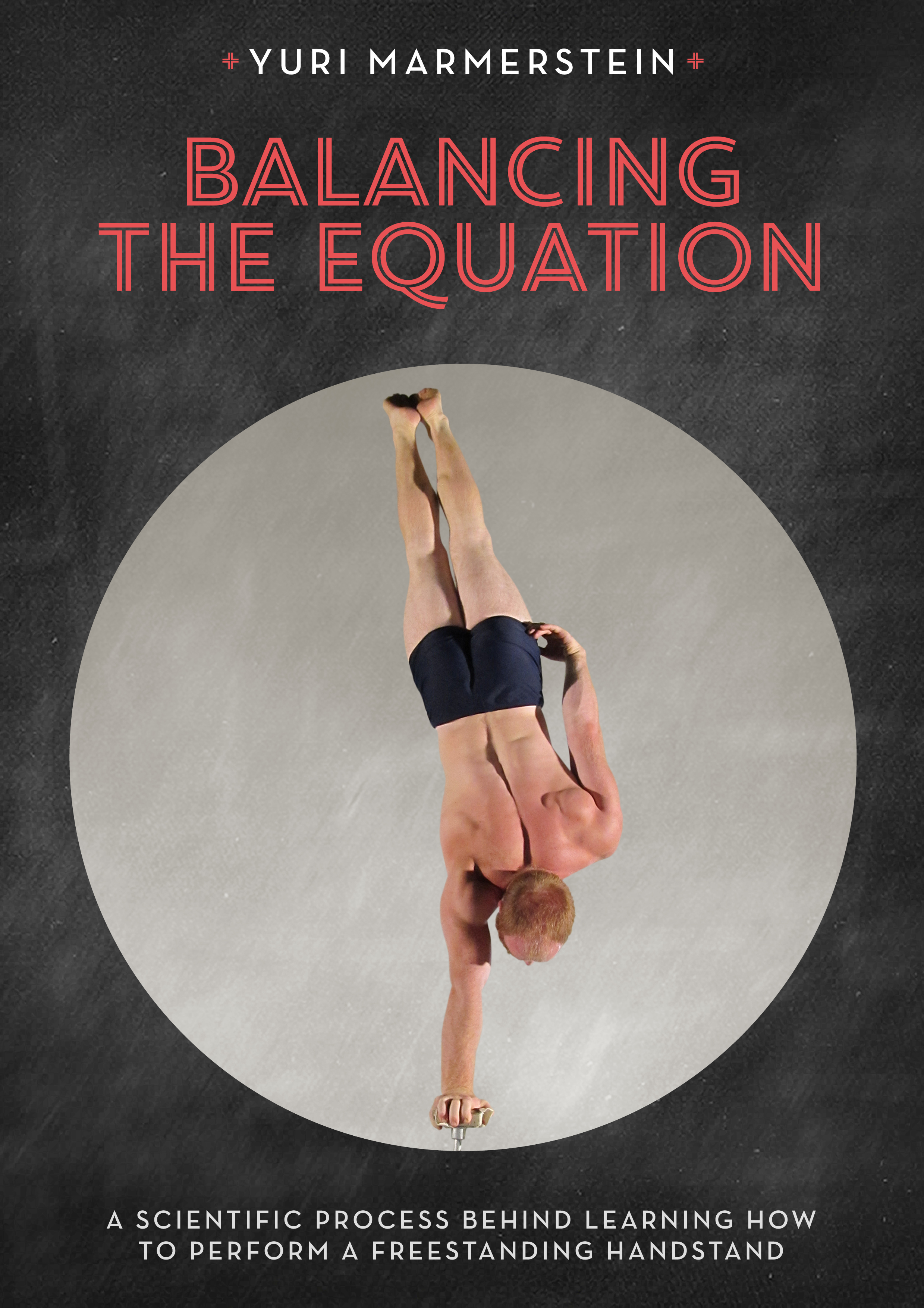
The handstand is one of the most simple, yet one of the most humbling, skills in the span of the physical arts. It seems so simple, yet it can be an incredibly frustrating skill to learn. Because of this, many people think that handstands are reserved for gymnasts and circus performers. Let me say, though, that the handstand is accessible to anyone willing to put in the time.
A hand balance practice is incredibly beneficial for the body and mind. The amount of concentration required makes it a form of meditation. Physically, it is an incredible display of strength, body control and awareness. Balancing on your hands requires constantly making small adjustments within the body. There is no other art form that requires as much precision as the handstand.
This book breaks down the process to achieving a freestanding handstand for a beginner, starting from the very basics. This process is useful to those learning their first handstands as well as those who teach it, such as gymnastics coaches, CrossFit coaches and yoga instructors. The concepts detailed in this book are focused on learning the skill as an adult by promoting understanding of the art in order to make progress. It takes the mystery out of the skill, and presents it in a way anyone can learn.
In order to complement the material in this ebook, check out the associated Video exercise library: https://vimeo.com/ondemand/190235